Friday, September 17, 2010

Wednesday, September 15, 2010
Durga Puja Fast
Durga Puja Fast
Devotees of Goddess Durga observe fast on the occasion of nine-day-long Durga Puja celebrations every year with full faith and sincerity. The purpose of observing fast is to propitiate Durga Ma and seek her divine blessings. Having been religiously carried out since ages during the festival of Navratri or Durga Puja, the fast has become an intrinsic part of the festival.
Purpose of Observing Fast
Hindus have high regards for Goddess Durga whom they look upon as Ma or Mother of all. Fast to them is a denial of the physical needs of the body and a means to attain spiritual gains besides blessings of the Mother Goddess. Hindus sincerely believe that fasting helps in establishing a harmonious coordination between body and soul. Besides, fasting is also considered to be good for the body. It helps to keep body healthy by giving digestive organs some rest and cleansing the body of toxic materials.
Durga Puja Fast Rituals
The custom of observing Durga Puja Fast is particularly prevalent in Northern India. In the state of Punjab people observe fast for seven days of the nine-day-long Durga Puja Festival. The fast is broken only on the ashtami or navmi day. Some devotees of Durga Ma consume only milk during the fasting days while some only live on fruits. Some devotees observe ‘Ekana’ which means that they take one complete meal during the day. Non-vegetarian food, intoxicating substances and other forms of entertainment are completely avoided during the fasting days. Men observing fast are not supposed to shave. Some also believe in sleeping on the ground and thereby deny themselves all luxuries and comforts.
Fasting during Durga Puja festival is also quite popular in the state of West Bengal and several other Southern states. At the end of the fasting period devotees feed beggars and worship little girls who spell the Shakti of Mother Goddess.
At several places there is a tradition of sowing barley seeds during the Durga Puja fasting period. In this a small bed of mud is prepared in a little container and barley seeds are sown in it. This is placed in the Puja room and cared for during the fasting period. At the end of the fast the shoots reach a height of 3-5 inches. These are pulled out and given to devotees as form of blessings.
Modern Fasting Trends
It is interesting to note that the present generation has retained the custom of fasting during Durga Puja. Though many observe fast in its true meaning some have molded it suit their taste buds. Rush of people in the stall selling vrat (fast) ki chaat and vrat ki namkeen is a common site especially in metropolitan cities. Restaurants too offer a special menu to those observing Navratri fast. While many look at the changing trends with skepticism others feel that such transformation does not matter a lot as long as people have faith in Durga Ma.
| |
Purpose of Observing Fast
Hindus have high regards for Goddess Durga whom they look upon as Ma or Mother of all. Fast to them is a denial of the physical needs of the body and a means to attain spiritual gains besides blessings of the Mother Goddess. Hindus sincerely believe that fasting helps in establishing a harmonious coordination between body and soul. Besides, fasting is also considered to be good for the body. It helps to keep body healthy by giving digestive organs some rest and cleansing the body of toxic materials.
Durga Puja Fast Rituals
The custom of observing Durga Puja Fast is particularly prevalent in Northern India. In the state of Punjab people observe fast for seven days of the nine-day-long Durga Puja Festival. The fast is broken only on the ashtami or navmi day. Some devotees of Durga Ma consume only milk during the fasting days while some only live on fruits. Some devotees observe ‘Ekana’ which means that they take one complete meal during the day. Non-vegetarian food, intoxicating substances and other forms of entertainment are completely avoided during the fasting days. Men observing fast are not supposed to shave. Some also believe in sleeping on the ground and thereby deny themselves all luxuries and comforts.
Fasting during Durga Puja festival is also quite popular in the state of West Bengal and several other Southern states. At the end of the fasting period devotees feed beggars and worship little girls who spell the Shakti of Mother Goddess.
At several places there is a tradition of sowing barley seeds during the Durga Puja fasting period. In this a small bed of mud is prepared in a little container and barley seeds are sown in it. This is placed in the Puja room and cared for during the fasting period. At the end of the fast the shoots reach a height of 3-5 inches. These are pulled out and given to devotees as form of blessings.
Modern Fasting Trends
It is interesting to note that the present generation has retained the custom of fasting during Durga Puja. Though many observe fast in its true meaning some have molded it suit their taste buds. Rush of people in the stall selling vrat (fast) ki chaat and vrat ki namkeen is a common site especially in metropolitan cities. Restaurants too offer a special menu to those observing Navratri fast. While many look at the changing trends with skepticism others feel that such transformation does not matter a lot as long as people have faith in Durga Ma.
Regional Names of Durga Puja
Regional Names of Durga Puja
Durga Puja is identified by different regional names throughout India. This diversity across various states bind the people in a unique way. Durga Puja is one of the most important religious festival of Hindus, celebrating the return of the goddess to her natal home. But, this great Hindu festival is recounted and celebrated slightly differently in various regions taking on different forms and names. The festival of Durga Puja is characterized by a variety of prayers and rituals. The name of the Durga puja vary from locale to locale as common for most of the Hindu festivals. The various distinct regional names of this festival are:
| | ||
|

- Durga Puja / Durga Pujo
- Navratri Puja
- Kullu Dussehra
- Mysore Dussehra
- Bommai Kolu
- Ayudha Puja
- Vidyaramba
- Saraswati Puja
- Simollanghan
Durga Sahasranamam
Durga Sahasranamam
On the auspicious occasion of Durga Puja chant Shri Durga Sahasranamam with full faith and sincerity and invoke the blessings and good wishes of Durga Ma.
Click here for full version of Durga Sahasranamam in Devnagri Script
108 Names of Durga Puja
108 Names of Durga Puja
| Name | Meaning |
| Durga | The Inaccessible |
| Devi | The Diety |
| Tribhuvaneshwari | Goddess of The Three Worlds |
| Yashodagarba Sambhoota | Emerging From Yashoda's Womb |
| Narayanavarapriya | Fond of Narayana's Boons |
| Nandagopakulajata | Daughter Of The Nandagopa Race |
| Mangalya | Auspicious |
| Kulavardhini | Developer Of The Race |
| Kamsavidravanakari | Threatened Kamsa |
| Asurakshayamkari | Reducer Of The Number Of Demons |
| Shilathata Vinikshibda | At Birth,Slammed By Kamsa |
| Akashagamini | Flew In The Sky |
| Vasudevabhagini | Sister Of Vasudeva |
| Divamalya Vibhooshita | Adorned With Beautiful Garlands |
| Divyambaradhara | Beautifully Robed |
| Khadgaketaka Dharini | Holder Of Sword And Shield |
| Shiva | Auspicious |
| Papadharini | Bearer Of Others' Sins |
| Varada | Granter Of Boons |
| Krishna | Sister Of Krishna |
| Kumari | Young Girl |
| Brahmacharini | Seeker Of Brahman |
| Balarkasadrushakara | Like The Rising Sun |
| Purnachandra Nibhanana | Beautiful Like The Full Moon |
| Chaturbhuja | Four-Armed |
| Chaturvakttra | Four-Faced |
| Peenashroni Payodhara | Large Bosomed |
| Mayoora Pichhavalaya | Wearer Of Peacock-Feathered Bangles |
| Keyurangadadharini | Bejewelled With Armlets And Bracelets |
| Krishnachhavisama | Like Krishna's Radiance |
| Krishna | Dark-Complexioned |
| Sankarshanasamanana | Equal To Sankarshana |
| Indradhwaja Samabahudharini | With Shoulders Like Indra's Flag |
| Patradharini | Vessel-Holder |
| Pankajadharini | Lotus-Holder |
| Kanttadhara | Holder of Shiva's Neck |
| Pashadharini | Holder Of Rope |
| Dhanurdharini | Holder Of Bow |
| Mahachakradharini | Holder Of Chakra |
| Vividayudhadhara | Bearer Of Various Weapons |
| Kundalapurnakarna Vibhooshita | Wearer Of Earrings Covering The Ears |
| Chandravispardimukha | Beautiful Like The Moon |
| Mukutavirajita | Shining With Crown Adorned |
| Shikhipichhadwaja Virajita | Having Peacock-Feathered Flag |
| Kaumaravratadhara | Observer Of Fasts Like Young Girls Do |
| Tridivabhavayirtri | Goddess Of The Three Worlds |
| Tridashapujita | The Goddess Of The Celestials |
| Trailokyarakshini | Protector Of The Three Worlds |
| Mahishasuranashini | Destroyer Of Mahisha |
| Prasanna | Cheerful |
| Surashreshtta | Supreme Among The Celestials |
| Shiva | Shiva's Half |
| Jaya | Victorious |
| Vijaya | Conqueror |
| Sangramajayaprada | Granter Of Victory In The War |
| Varada | Bestower |
| Vindhyavasini` | Resident Of The Vindhyas |
| Kali | Dark-Complexioned |
| Kali | Goddess Of Death |
| Mahakali | Wife Of Mahakala |
| Seedupriya | Fond Of Drinks |
| Mamsapriya | Fond Of Flesh |
| Pashupriya | Fond Of All Beings |
| Bhootanushruta | Well-Wisher Of Bhootaganas |
| Varada | Bestower |
| Kamacharini | Acting On One's Own Accord |
| Papaharini | Destroyer Of Sins |
| Kirti | Famed |
| Shree | Auspicious |
| Dhruti | Valiant |
| Siddhi | Successful |
| Hri | Holy Chant Of Hymns |
| Vidhya | Wisdom |
| Santati | Granter Of Issues |
| Mati | Wise |
| Sandhya | Twilight |
| Ratri | Night |
| Prabha | Dawn |
| Nitya | Eternal |
| Jyotsana | Radiant Like Flames |
| Kantha | Radiant |
| Khama | Embodiment Of Forgiveness |
| Daya | Compassionate |
| Bandhananashini | Detacher Of Attachments |
| Mohanashini | Destroyer Of Desires |
| Putrapamrityunashini | Sustainer Of Son's Untimely Death |
| Dhanakshayanashini | Controller Of Wealth Decrease |
| Vyadhinashini | Vanquisher Of Ailments |
| Mruthyunashini | Destroyer Of Death |
| Bhayanashini | Remover Of Fear |
| Padmapatrakshi | Eyes Like The Lotus Leaf |
| Durga | Remover Of Distress |
| Sharanya | Granter Of Refuge |
| Bhaktavatsala | Lover Of Devotees |
| Saukhyada | Bestower Of Well-Being |
| Arogyada | Granter Of Good Health |
| Rajyada | Bestower Of Kingdom |
| Ayurda | Granter Of Longevity |
| Vapurda | Granter Of Beautiful Appearance |
| Sutada | Granter Of Issues |
| Pravasarakshika | Protector Of Travellers |
| Nagararakshika | Protector Of Land |
| Sangramarakshika | Protector Of Wars |
| Shatrusankata Rakshika | Protector From Distress Caused By Foes |
| Ataviduhkhandhara Rakshika | Protector From Ignorance And Distress |
| Sagaragirirakshika | Protector Of Seas And Hills |
| Sarvakaryasiddhi Pradayika | Granter Of Success In All Attempts |
| Durga | Deity Durga |
What the epics say - 'Akalbodhan'
What the epics say - 'Akalbodhan'
The worship of Devi Durga in the month of Ashwin is called 'Akalbodhan'- an uncustomary time for commencement of the worship. It is so called since the period of this worship differs from the conventional period (during the spring - 'Basanta'). Ramayana says that when Rama was engaged in the fierce battle with Ravana, he wanted to secure the blessings of victory from Devi Durga. He held the puja to evoke the goddess during autumn to his dire plight, thereby worshiping Durga untimely (in Akal). Hence this puja is called Akalbodhon.
It was customary to worship Durga with 100 neel kamals (blue lotuses). Rama could gather only 99 of them; he offered one of his eyes as a substitute of the 100th lotus. Pleased with his devotion Durga blessed him. The battle started on Shaptami and Ravana was killed at the Shandhikshan (in between) Ashtami and Navami; he was cremated on Dashami. Therefore the four days of the puja that we celebrate ends in the triumph of the good over evil.
| | ||
|

It was customary to worship Durga with 100 neel kamals (blue lotuses). Rama could gather only 99 of them; he offered one of his eyes as a substitute of the 100th lotus. Pleased with his devotion Durga blessed him. The battle started on Shaptami and Ravana was killed at the Shandhikshan (in between) Ashtami and Navami; he was cremated on Dashami. Therefore the four days of the puja that we celebrate ends in the triumph of the good over evil.
The Bengalee Belief
The Bengalee Belief
Sati, the consort of Shiva was the daughter of Daksha Prajaapati a descendant of Bhrama. Sati had married Shiva against the wishes of her father. Daksha was sponsoring a sacrifice and attendees came from various parts of the universe. He invited all of the gods and goddesses except his son in law Shiva. Against Shiva's wishes, Sati attended this sacrifice and was insulted by her father. Unable to bear this insult, Sati immolated herself.
Enraged at the insult and the injury, Shiva destroyed Daksha's sacrifice, cut off Daksha's head and when pleaded by other gods, replaced it with that of a goat and restored him to life. Still berserk with grief, he picked up the remains of Sati's body, and danced the dance of destruction throughout the Universe. The other gods intervened to stop this dance, and the disk of Vishnu cut through the corpse of Sati, whose various parts of the body fell at several spots all through the Indian subcontinent and formed the sites of what are known as Shakti Peethas today.
Shiva was finally pacified when the last piece fell off from his shoulder. Narayana revived sati as Uma for a new life. Ever since peace was restored, Uma, with her children, Ganesh and Kartick, and with her two 'sakhis' - Jaya and Bijaya, comes to visit her parent's home each year during the season of 'Sharat' or autumn when Durga Puja is celebrated.
| | ||
|
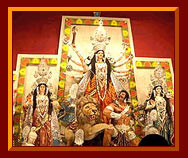
Enraged at the insult and the injury, Shiva destroyed Daksha's sacrifice, cut off Daksha's head and when pleaded by other gods, replaced it with that of a goat and restored him to life. Still berserk with grief, he picked up the remains of Sati's body, and danced the dance of destruction throughout the Universe. The other gods intervened to stop this dance, and the disk of Vishnu cut through the corpse of Sati, whose various parts of the body fell at several spots all through the Indian subcontinent and formed the sites of what are known as Shakti Peethas today.
Shiva was finally pacified when the last piece fell off from his shoulder. Narayana revived sati as Uma for a new life. Ever since peace was restored, Uma, with her children, Ganesh and Kartick, and with her two 'sakhis' - Jaya and Bijaya, comes to visit her parent's home each year during the season of 'Sharat' or autumn when Durga Puja is celebrated.
The Essentials of Durga Puja
The Essentials of Durga Puja
Specific items are needed for each day of Durga Puja. There is a detailed method to worshiping Goddess Durga that are mentioned in the scriptures. Items which are needed for the ritual worship of the goddess should be collected beforehand so that the ritual is performed smoothly. The list of essentials of Durga Puja are:
Items needed for Kalparambho, the ritual performed before the commencement of the puja and Mahasna:
Food Offerings : Panchashasha (grains of five types - rice, mung or whole green gram, til or sesame, mashkalai or any variety of whole black leguminous seed, job or millet), panchagobbo (five items obtained from the cow - milk, ghee or clarified butter, curd, cow dung and gomutra ), curd, honey, sugar, three big noibiddos , one small noibiddo, three bowls of madhupakka (a mixture of honey, curd, ghee and sugar for oblation), bhoger drobbadi (items for the feast), aaratir drobbadi mahasnan oil, dantokashtho, sugar cane juice, an earthen bowl of atop (a type of rice), til toilo (sesame oil).
Water Offerings: Ushnodok (lukewarm water), coconut water, sarbooushodhi , mahaoushodhi, water from oceans, rain water, spring water, water containing lotus pollen.
Puja Items: Sindur (vermillion), panchabarner guri (powders of five different colours - turmeric, rice, kusum flowers or red aabir, rice chaff or coconut fibre burnt for the dark colour, bel patra or powdered wood apple leaves), panchapallab (leaves of five trees - mango, pakur or a species of fig, banyan, betal and Joggodumur or fig), pancha ratna (five types of gems - gold, diamond, sapphire, ruby and pearl), panchakoshay (bark of five trees - jaam, shimul, berela, kool, bokul powdered in equal portions and mixed with water), green coconut with stalk, three aashonanguriuk (finger ring made of kusha).
Cloth Offerings: Gamcha or a piece of cloth to cover the pot, a dhoti for Vishnu, a sari each for bodhon and Chandi.
Decorative Items : Ghat or a pot, kundohari , a mirror, four arrows, tekatha or a triangular frame of wood, horitoki flowers (myrobalan), chandmala (garland with circular decorations), aashon (a mattress of jute or hay).
Other Items : Water camphor and perfumed sandal wood paste. soil - extracted from elephant tusks, from the teeth of the pig, from the horns of the ox, from the bank of rivers Ganga and Saraswati, from both the banks of a river, from a place where four roads intersect, from palaces, from the ant hill, from the mountains, Vishnu toilo.
Items needed for the Shashthi puja of Goddess Durga:
Food Offerings: A stem of wood apple with fruits, green coconut with stalk, an earthen bowl full of atop, three bowls of madhupakka, sesame seeds, curd, honey, clarified butter, sugar, three big noibiddos, one small noibiddo, bhoger drobbadi, aaratir drobbadi, grain, fruits, one dozen bananas with a single stem, white mustard seeds.
Puja Items : A pot, four arrows two ashonanguriuk, panchapallab, pancha ratna, panchashasha, panchagobbo, tekatha, dubba grass, sindur, swastik pituli, conch shell, kajol (corrilium), gorachana, yellow thread, chamor, a fly-whisk made of yak's tail used for fanning, earthen lamps, panch pradip for arati.
Cloth Offerings: Gamcha to cover the pot, a dhoti for the wood apple tree, a sari for bodhon, one sari for amontron.
Decorative Items: Myrobalan, flowers, chandmala, adibas oil, turmeric, soil from the bank of river Ganga, perfume, stone, gold, silver, copper, iron, mirror and alta.
Items Needed For Saptami Puja of Goddess Durga:
Food Offerings: Sesame seeds, myrobalan, flowers, two earthen bowls full of atop, green coconut with stalk, wood apple leaves, white mustard, madhupakka (40 or 22 bowls), honey, sugar, noibiddos (40 or 22), one main noibiddo, fruits, items for bhog.
Puja Items: Jute ropes, red thread, alta, four finger rings, four yadnyopaveet, a pot, a mirror, a tekatha, sandalwood, mashkolai, hibiscus flower, small noibiddo, one big earthen lamp, panchapallab, pancha ratna, panchashasha, panchaguri, vermillion, items for arati, items for the yadnya - sand, wood, dry khorke grass, cowdung, kusha grass, ghee, 108 bel leaves and a bowl.
Cloth Offerings: Clothes for the Pundit, a piece of cloth, gamcha for arati, 40 or 22 finger rings made of kusha, sari for nabapatrika, one sari for the main puja, saris for Durga, Lakshmi, Saraswati, Chandi, dhoti for Kartik, Ganesh, Shiva, Vishnu, clothes for nine planets, clothes for peacock, mouse, lion, demon, buffalo, ox, snake, chandmala, a nosering, iron, conch shell.
Plants and flowers offerings: Flower garland, belpatra garland, Banana plant, turmeric plant, colacassia plant, wood apple stem, pomegranate stem, a stem of Jayanti plant, arum plant, rice plant, ashoka stem, twigs of white aparajita plant, two banana stems.
Items needed for Ashtami Puja of Goddess Durga:
Food Offerings : Fruits, items for bhog, items for arati, 40 or 22 bowls of madhupakka, honey, sugar, curd, ghee, 40 or 22 noibiddos, four small noibiddos.
Cloth Offerings : One sari for Durga, new clothes for Lakshmi, Saraswati, Chandi, Kartik, Ganesh, Shiva, Vishnu, nine planets, the peacock, mouse, lion, demon, buffalo, ox, snake, Jaya, Bijoya and Ram.
Puja Items : One dantakashto, 40 or 22 finger rings made of kusha, one nosering, iron, two conch shells, a box of vermillion, flowers, a garland, belpatra garland, one chandmala, one ghoti.
For Sandhi Puja - Flowers, gold ring, a bronze bowl for madhupakka, a small sari, main noibiddo, one small noibiddo, one plate, one pitcher, iron, one nosering, one pillow, a mat, a chandmala, 108 earthen lamps, items for bhog, and items for the arati .
Items needed for Nabami and Dashami Pujas:
Food Offerings : Betel leaves, pan masala, 40 or 22 bowls of madhupakka, honey, sugar, curd, ghee, 40 or 22 noibiddos, four small noibiddos.
Cloth Offerings : Clothes for Lakshmi, Saraswati, Chandi, Kartik, Ganesh, Shiva, Vishnu, the nine planets, the peacock, mouse, lion, demon, buffalo, ox, snake, Jaya, Bijoya and Ram, one dantakashto , one sari for the main puja.
Puja Items: Flowers, 40 or 22 finger rings made of kusha, one ghoti , one nosering, iron, two conch shells, a box of vermillion, flower garland, belpatra garland, a chandmala, one plate, items needed for the yadnya (fire sacrifice), bel leaves, gift for the Purohit.
For the Dashami puja - Perfume, flowers, durba grass, basil leaves, bel leaves, incense sticks, an earthen lamp, noibiddo, curd, murki, sweets and items needed for arati.
| | ||
|
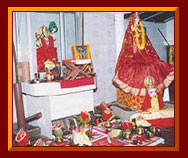
Items needed for Kalparambho, the ritual performed before the commencement of the puja and Mahasna:
Food Offerings : Panchashasha (grains of five types - rice, mung or whole green gram, til or sesame, mashkalai or any variety of whole black leguminous seed, job or millet), panchagobbo (five items obtained from the cow - milk, ghee or clarified butter, curd, cow dung and gomutra ), curd, honey, sugar, three big noibiddos , one small noibiddo, three bowls of madhupakka (a mixture of honey, curd, ghee and sugar for oblation), bhoger drobbadi (items for the feast), aaratir drobbadi mahasnan oil, dantokashtho, sugar cane juice, an earthen bowl of atop (a type of rice), til toilo (sesame oil).
Water Offerings: Ushnodok (lukewarm water), coconut water, sarbooushodhi , mahaoushodhi, water from oceans, rain water, spring water, water containing lotus pollen.
Puja Items: Sindur (vermillion), panchabarner guri (powders of five different colours - turmeric, rice, kusum flowers or red aabir, rice chaff or coconut fibre burnt for the dark colour, bel patra or powdered wood apple leaves), panchapallab (leaves of five trees - mango, pakur or a species of fig, banyan, betal and Joggodumur or fig), pancha ratna (five types of gems - gold, diamond, sapphire, ruby and pearl), panchakoshay (bark of five trees - jaam, shimul, berela, kool, bokul powdered in equal portions and mixed with water), green coconut with stalk, three aashonanguriuk (finger ring made of kusha).
Cloth Offerings: Gamcha or a piece of cloth to cover the pot, a dhoti for Vishnu, a sari each for bodhon and Chandi.
Decorative Items : Ghat or a pot, kundohari , a mirror, four arrows, tekatha or a triangular frame of wood, horitoki flowers (myrobalan), chandmala (garland with circular decorations), aashon (a mattress of jute or hay).
Other Items : Water camphor and perfumed sandal wood paste. soil - extracted from elephant tusks, from the teeth of the pig, from the horns of the ox, from the bank of rivers Ganga and Saraswati, from both the banks of a river, from a place where four roads intersect, from palaces, from the ant hill, from the mountains, Vishnu toilo.
Items needed for the Shashthi puja of Goddess Durga:
Food Offerings: A stem of wood apple with fruits, green coconut with stalk, an earthen bowl full of atop, three bowls of madhupakka, sesame seeds, curd, honey, clarified butter, sugar, three big noibiddos, one small noibiddo, bhoger drobbadi, aaratir drobbadi, grain, fruits, one dozen bananas with a single stem, white mustard seeds.
Puja Items : A pot, four arrows two ashonanguriuk, panchapallab, pancha ratna, panchashasha, panchagobbo, tekatha, dubba grass, sindur, swastik pituli, conch shell, kajol (corrilium), gorachana, yellow thread, chamor, a fly-whisk made of yak's tail used for fanning, earthen lamps, panch pradip for arati.
Cloth Offerings: Gamcha to cover the pot, a dhoti for the wood apple tree, a sari for bodhon, one sari for amontron.
Decorative Items: Myrobalan, flowers, chandmala, adibas oil, turmeric, soil from the bank of river Ganga, perfume, stone, gold, silver, copper, iron, mirror and alta.
Items Needed For Saptami Puja of Goddess Durga:
Food Offerings: Sesame seeds, myrobalan, flowers, two earthen bowls full of atop, green coconut with stalk, wood apple leaves, white mustard, madhupakka (40 or 22 bowls), honey, sugar, noibiddos (40 or 22), one main noibiddo, fruits, items for bhog.
Puja Items: Jute ropes, red thread, alta, four finger rings, four yadnyopaveet, a pot, a mirror, a tekatha, sandalwood, mashkolai, hibiscus flower, small noibiddo, one big earthen lamp, panchapallab, pancha ratna, panchashasha, panchaguri, vermillion, items for arati, items for the yadnya - sand, wood, dry khorke grass, cowdung, kusha grass, ghee, 108 bel leaves and a bowl.
Cloth Offerings: Clothes for the Pundit, a piece of cloth, gamcha for arati, 40 or 22 finger rings made of kusha, sari for nabapatrika, one sari for the main puja, saris for Durga, Lakshmi, Saraswati, Chandi, dhoti for Kartik, Ganesh, Shiva, Vishnu, clothes for nine planets, clothes for peacock, mouse, lion, demon, buffalo, ox, snake, chandmala, a nosering, iron, conch shell.
Plants and flowers offerings: Flower garland, belpatra garland, Banana plant, turmeric plant, colacassia plant, wood apple stem, pomegranate stem, a stem of Jayanti plant, arum plant, rice plant, ashoka stem, twigs of white aparajita plant, two banana stems.
Items needed for Ashtami Puja of Goddess Durga:
Food Offerings : Fruits, items for bhog, items for arati, 40 or 22 bowls of madhupakka, honey, sugar, curd, ghee, 40 or 22 noibiddos, four small noibiddos.
Cloth Offerings : One sari for Durga, new clothes for Lakshmi, Saraswati, Chandi, Kartik, Ganesh, Shiva, Vishnu, nine planets, the peacock, mouse, lion, demon, buffalo, ox, snake, Jaya, Bijoya and Ram.
Puja Items : One dantakashto, 40 or 22 finger rings made of kusha, one nosering, iron, two conch shells, a box of vermillion, flowers, a garland, belpatra garland, one chandmala, one ghoti.
For Sandhi Puja - Flowers, gold ring, a bronze bowl for madhupakka, a small sari, main noibiddo, one small noibiddo, one plate, one pitcher, iron, one nosering, one pillow, a mat, a chandmala, 108 earthen lamps, items for bhog, and items for the arati .
Items needed for Nabami and Dashami Pujas:
Food Offerings : Betel leaves, pan masala, 40 or 22 bowls of madhupakka, honey, sugar, curd, ghee, 40 or 22 noibiddos, four small noibiddos.
Cloth Offerings : Clothes for Lakshmi, Saraswati, Chandi, Kartik, Ganesh, Shiva, Vishnu, the nine planets, the peacock, mouse, lion, demon, buffalo, ox, snake, Jaya, Bijoya and Ram, one dantakashto , one sari for the main puja.
Puja Items: Flowers, 40 or 22 finger rings made of kusha, one ghoti , one nosering, iron, two conch shells, a box of vermillion, flower garland, belpatra garland, a chandmala, one plate, items needed for the yadnya (fire sacrifice), bel leaves, gift for the Purohit.
For the Dashami puja - Perfume, flowers, durba grass, basil leaves, bel leaves, incense sticks, an earthen lamp, noibiddo, curd, murki, sweets and items needed for arati.
Dussehra
Dussehra
The festival of Dussehra, also known as Vijayadashmi, is one of the fascinating festivals of India and is celebrated with joy and enthusiasm. According to the great Hindu scripture, the Ramayana, Lord Rama performed chandi-puja (holy prayer). This was carried out in order to invoke the blessings of Durga Maa for the killing of Ravana, the ten-headed demon king of Sri Lanka who had abducted Seeta, wife of Lord Rama.
Durga Maa divulged the secret to Rama on how he could slay the great Ravana. Hence upon vanquishing the demon Ravana, Lord Rama with Sita and younger brother Laxmana, returned victorious to his kingdom of Ayodhya on the day which is called 'Diwali'. Revelers across northern India re-enact the legend at sundown in a performance called the Ramlila, featuring actors dressed as Rama shooting flaming arrows at effigies stuffed with firecrackers.
Dussehra day is considered a most auspicious day. It is a time-honored belief that if any new venture is started on this day, it is bound to be successful. Hence, all the undertakings be it laying-in of foundation of a new building, opening of a new commercial establishment or even initiating a child into the world of learning- are started on this day. Also on this day implements of agriculture, manufacturer's machines, the intellectuals pens, the household articles, the children's school books are placed before the idol of Durga and worshiped.
| | ||
|
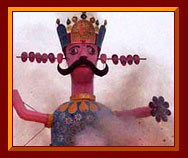
Durga Maa divulged the secret to Rama on how he could slay the great Ravana. Hence upon vanquishing the demon Ravana, Lord Rama with Sita and younger brother Laxmana, returned victorious to his kingdom of Ayodhya on the day which is called 'Diwali'. Revelers across northern India re-enact the legend at sundown in a performance called the Ramlila, featuring actors dressed as Rama shooting flaming arrows at effigies stuffed with firecrackers.
Dussehra day is considered a most auspicious day. It is a time-honored belief that if any new venture is started on this day, it is bound to be successful. Hence, all the undertakings be it laying-in of foundation of a new building, opening of a new commercial establishment or even initiating a child into the world of learning- are started on this day. Also on this day implements of agriculture, manufacturer's machines, the intellectuals pens, the household articles, the children's school books are placed before the idol of Durga and worshiped.
Mahalaya
Mahalaya
Mahalaya ushers in the aura of Durga Puja. The countdown for the Durga Puja begins much earlier, from the day of 'Janmastami'. It is only from the day of Mahalaya that the preparations for the Durga Puja reaches the final stage. The midnight chants of various hymns of 'Mahishasura Mardini' reminds one of the beginning of Durga Puja.
Mahalaya is an auspicious occasion observed seven days before the Durga Puja, and heralds the advent of Durga, the goddess of supreme power. It's a kind of invocation or invitation to the mother goddess to descend on earth - "Jago Tumi Jago". This is done through the chanting of mantras and singing devotional songs.
The day of Mahalaya is also the day of remembrance. On this day, people offer 'tarpan' in memory of their deceased forefathers. The banks of River Ganga becomes a sea of humanity. Priests are seen busy performing 'Tarpan' for devotees in groups. The rituals start from early down and end during the midday. Devotees and worshipers buy clothes and sweets to offer to their forefathers. 'Tarpan' is to be performed in empty stomach. After offering 'tarpan', people eat at the same place.
| | ||
|

Mahalaya is an auspicious occasion observed seven days before the Durga Puja, and heralds the advent of Durga, the goddess of supreme power. It's a kind of invocation or invitation to the mother goddess to descend on earth - "Jago Tumi Jago". This is done through the chanting of mantras and singing devotional songs.
The day of Mahalaya is also the day of remembrance. On this day, people offer 'tarpan' in memory of their deceased forefathers. The banks of River Ganga becomes a sea of humanity. Priests are seen busy performing 'Tarpan' for devotees in groups. The rituals start from early down and end during the midday. Devotees and worshipers buy clothes and sweets to offer to their forefathers. 'Tarpan' is to be performed in empty stomach. After offering 'tarpan', people eat at the same place.
Navratri
Navratri
Navratri, the festival of nights, lasts for 9 days with three days each devoted to worship of Ma Durga, the Goddess of Valor, Ma Lakshmi, the Goddess of Wealth and Ma Saraswati, the Goddess of Knowledge. During the nine days of Navratari, feasting and fasting take precedence over all normal daily activities amongst the Hindus. Evenings give rise to the religious dances in order to worhip Goddess Durga Maa.
1st - 3rd day of Navratri
On the first day of the Navaratras, a small bed of mud is prepared in the puja room of the house and barley seeds are sown on it. On the tenth day, the shoots are about 3 - 5 inches in length. After the puja, these seedlings are pulled out and given to devotees as a blessing from god. These initial days are dedicated to Durga Maa, the Goddess of power and energy. Her various manifestations, Kumari, Parvati and Kali are all worshipped during these days. They represent the three different classes of womanhood that include the child, the young girl and the mature woman.
4th - 6th day of Navratri
During these days, Lakshmi Maa, the Goddess of peace and prosperity is worshipped. On the fifth day which is known as Lalita Panchami, it is traditional, to gather and display all literature available in the house, light a lamp or 'diya' to invoke Saraswati Maa, the Goddess of knowledge and art.
7th - 8th day of Navratri
These final days belong to Saraswati Maa who is worshipped to acquire the spiritual knowledge. This in turn will free us from all earthly bondage. But on the 8th day of this colourful festival, yagna (holy fire) is performed. Ghee (clarified butter), kheer (rice pudding) and sesame seeds form the holy offering to Goddess Durga Maa.
Mahanavami
The festival of Navratri culminates in Mahanavami. On this day Kanya Puja is performed. Nine young girls representing the nine forms of Goddess Durga are worshiped. Their feet are washed as a mark of respect for the Goddess and then they are offered new clothes as gifts by the worshiper. This ritual is performed in most parts of the country.
| | ||
|
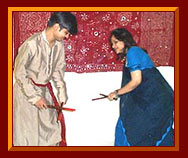
1st - 3rd day of Navratri
On the first day of the Navaratras, a small bed of mud is prepared in the puja room of the house and barley seeds are sown on it. On the tenth day, the shoots are about 3 - 5 inches in length. After the puja, these seedlings are pulled out and given to devotees as a blessing from god. These initial days are dedicated to Durga Maa, the Goddess of power and energy. Her various manifestations, Kumari, Parvati and Kali are all worshipped during these days. They represent the three different classes of womanhood that include the child, the young girl and the mature woman.
4th - 6th day of Navratri
During these days, Lakshmi Maa, the Goddess of peace and prosperity is worshipped. On the fifth day which is known as Lalita Panchami, it is traditional, to gather and display all literature available in the house, light a lamp or 'diya' to invoke Saraswati Maa, the Goddess of knowledge and art.
7th - 8th day of Navratri
These final days belong to Saraswati Maa who is worshipped to acquire the spiritual knowledge. This in turn will free us from all earthly bondage. But on the 8th day of this colourful festival, yagna (holy fire) is performed. Ghee (clarified butter), kheer (rice pudding) and sesame seeds form the holy offering to Goddess Durga Maa.
Mahanavami
The festival of Navratri culminates in Mahanavami. On this day Kanya Puja is performed. Nine young girls representing the nine forms of Goddess Durga are worshiped. Their feet are washed as a mark of respect for the Goddess and then they are offered new clothes as gifts by the worshiper. This ritual is performed in most parts of the country.
Different kinds of Puja
Different kinds of Puja
Durgapuja, over the years, has outgrown its religious connotations to a large extent as people all over the India celebrate it with a gusto. There are various ways in which Ma Durga is worshiped. The rituals and customs vary due to vast difference in the culture of Indian States. But, all these follow the century old tradition and practice that intermingle with historical ethos.
Maharashtra
In Maharashtra, Durga Puja is a fun occasion. Puja is performed each day and devotees don't remove the flower garland that is put each day on the idol or image of the deity. After nine days all nine are removed together. Young girls who have not attained maturity are invited to eat, play games, dance and sing. An elephant is drawn with rangoli and the girls play guessing games. Then they are fed a meal of their choice.
West Bengal
In West Bengal, Durga Puja is five days of festivity. It hinges around Mahalaya day, a week before the actual celebrations begin. It was on this day that Durga was assigned the task of eliminating evil. So the familiar pose of Durga unleashing her wrath on an out powered assura (demon). Legend goes that Ram wanted to invoke the blessings of Durga before his great war with Ravan. He performed the Durga Puja despite the time of year not being right. That is why the puja is also known as Akal Bodhon, or untimely invocation.
Punjab
People of Punjab strictly observes Navratri. Some Punjabus have only milk for seven days before breaking the fast on ashtami or navami. They worship Durga Ma and do the aarti at home. Some of them have fruit or a complete meal once a day and intoxicating drinks or meat and other form of entertainment is completely avoided. At the end of the fast devotees feed beggars or worship little girls who spell the Shakti of the Mother Goddess.
Gujarat
Navratri is devoted to Amba mataji. In some homes, images of mataji are worshiped in accordance with accepted practice. This is also true of the temples, which usually have a constant stream of visitors from morning to night. The most common form of public celebration is the performance of garba or dandia-ras, Gujarat's popular folk-dance, late throughout the nights of these nine days in public squares, open grounds and streets.
Kerala
In Kerala, Durga Puja signifies the beginning of formal education for every child aged 3-5 years. While puja goes on in the temple for all ten days, it is only the concluding three days which are really important. Ashtami is the day of Ayudya Puja, when all the tools at home are worshiped. Custom dictates that no tools be used on this day. On navami, day, Goddess Saraswati is honored by worshiping the books and records at home.
| | ||
|
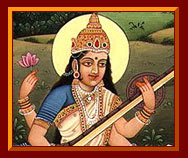
Maharashtra
In Maharashtra, Durga Puja is a fun occasion. Puja is performed each day and devotees don't remove the flower garland that is put each day on the idol or image of the deity. After nine days all nine are removed together. Young girls who have not attained maturity are invited to eat, play games, dance and sing. An elephant is drawn with rangoli and the girls play guessing games. Then they are fed a meal of their choice.
West Bengal
In West Bengal, Durga Puja is five days of festivity. It hinges around Mahalaya day, a week before the actual celebrations begin. It was on this day that Durga was assigned the task of eliminating evil. So the familiar pose of Durga unleashing her wrath on an out powered assura (demon). Legend goes that Ram wanted to invoke the blessings of Durga before his great war with Ravan. He performed the Durga Puja despite the time of year not being right. That is why the puja is also known as Akal Bodhon, or untimely invocation.
Punjab
People of Punjab strictly observes Navratri. Some Punjabus have only milk for seven days before breaking the fast on ashtami or navami. They worship Durga Ma and do the aarti at home. Some of them have fruit or a complete meal once a day and intoxicating drinks or meat and other form of entertainment is completely avoided. At the end of the fast devotees feed beggars or worship little girls who spell the Shakti of the Mother Goddess.
Gujarat
Navratri is devoted to Amba mataji. In some homes, images of mataji are worshiped in accordance with accepted practice. This is also true of the temples, which usually have a constant stream of visitors from morning to night. The most common form of public celebration is the performance of garba or dandia-ras, Gujarat's popular folk-dance, late throughout the nights of these nine days in public squares, open grounds and streets.
Kerala
In Kerala, Durga Puja signifies the beginning of formal education for every child aged 3-5 years. While puja goes on in the temple for all ten days, it is only the concluding three days which are really important. Ashtami is the day of Ayudya Puja, when all the tools at home are worshiped. Custom dictates that no tools be used on this day. On navami, day, Goddess Saraswati is honored by worshiping the books and records at home.
Thousands throng the Saraswati temple at Kottayam during this period to take a dip in the mysterious holy pond whose source is yet unknown. Large gatherings are also seen at the famous temples at Thekkegram (Palghat), in which there are no idols -- only huge mirrors. A devotee finds himself bowing before his own reflection which indicates that God is within us.
Kashmir
Hindus are a minority in Jammu and Kashmir but they celebrate their festivals with pomp and show. These days, festivities are subdued, though. The favorite deities of Kashmir are Lord Shiva and Serawali Ma Durga, the one who rides the tiger. Pundits and Muslims alike vouch that Navratri is important. No big pandals here, each Hindi house-hold does the pooja at home. All the adult members of the household fast on water. In the evenings, fruit may be taken. As elsewhere, Kashmiris grow barley in earthen pots. They believe that if the growth in this pot is good, there is prosperity all year.
The most important ritual for Kashmiri Pandits is to visit the temple of guardian goddess Kheer Bhawani on all nine days. On the last day of Navratri, an aarti is held at the temple after which people break their fast. On Dussehra day, Ravana's effigy is burnt. Devotees also visit the Hari Parbat temple.
Kashmir
Hindus are a minority in Jammu and Kashmir but they celebrate their festivals with pomp and show. These days, festivities are subdued, though. The favorite deities of Kashmir are Lord Shiva and Serawali Ma Durga, the one who rides the tiger. Pundits and Muslims alike vouch that Navratri is important. No big pandals here, each Hindi house-hold does the pooja at home. All the adult members of the household fast on water. In the evenings, fruit may be taken. As elsewhere, Kashmiris grow barley in earthen pots. They believe that if the growth in this pot is good, there is prosperity all year.
The most important ritual for Kashmiri Pandits is to visit the temple of guardian goddess Kheer Bhawani on all nine days. On the last day of Navratri, an aarti is held at the temple after which people break their fast. On Dussehra day, Ravana's effigy is burnt. Devotees also visit the Hari Parbat temple.
Different Forms of Durga
Different Forms of Durga
As the ten-armed Goddess, Goddess Durga presents a radiantly beautiful form that is bewitching to behold. That special form is somehow simultaneously wrathful and benign and transmits profound spiritual teachings in an exacting manner. The nine-day period from the new moon day to the ninth day of Ashvina is considered the most auspicious time of the Hindu Calendar and is hence the most celebrated time of the year as Durga Puja. The nine different forms of Devi are worshiped over the nine days. These are the most popular forms under which she is worshiped:
Durga Shailputri (Daughter of Mountain)
She is a daughter of Himalaya and first among nine Durgas. In previous birth she was the daughter of Daksha. Her name was Sati - Bhavani. i.e. the wife of Lord Shiva. Once Daksha had organized a big Yagna and did not invite Shiva. But Sati being obstinate, reached there. Thereupon Daksha insulted Shiva. Sati could not tolerate the insult of husband and burnt herself in the fire of Yagna. In other birth she became the daughter of Himalaya in the name of Parvati - Hemvati and got married with Shiva. As per Upnishad she had torn and the egotism of Indra, etc. Devtas. Being ashamed they bowed and prayed that, "In fact, thou are Shakti, we all - Brahma, Vishnu and Shiv are capable by getting Shakti from you."
Brahmacharini
Kalratri
Seventh Durga is Kalratri. She is black like night. Durga hairs are unlocked. She has put on necklaces shining like lightening. She has three eyes which are round like universe. Her eyes are bright. Thousands of flames of fire come out while respiring from nose. She rides on Shava (dead body). There is sharp sword in her right hand. Her lower hand is in blessing mood. The burning torch (mashal) is in her left hand and her lower left hand is in fearless style, by which she makes her devotees fearless. Being auspicious she is called "Shubhamkari."
Maha Gauri
The Eighth Durga is "Maha Gauri." She is as white as a conch, moon and Jasmine. She is of eight years old. Her clothes and ornaments are white and clean. She has three eyes. She rides on bull She has four hands. The above left hand is in "Fearless - Mudra" and lower left hand holds "Trishul." The above right hand has tambourine and lower right hand is in blessing style. She is calm and peaceful and exists in peaceful style. It is said that when the body of Gauri became dirty due to dust and earth while observing penance, Shiva makes it clean with the waters of Gangas. Then her body became bright like lightening. There fore, she is known as "Maha Gauri" .
Siddhidatri
Ninth Durga us Siddhidatri. There are eight Siddhis , they are- Anima, Mahima, Garima, Laghima, Prapti, Prakamya, Iishitva & Vashitva. Maha Shakti gives all these Siddhies. It is said in "Devipuran" that the Supreme God Shiv got all these Siddhies by worshipping Maha Shakti. With her gratitude the half body of Shiv has became of Goddess and there fore his name "Ardhanarishvar" has became famous. The Goddess drives on Lion. She has four hands and looks pleased. This form of Durga is worshiped by all Gods, Rishis-Munis, Siddhas, Yogis, Sadhakas and devotees for attaining the best religious asset.
| |
Durga Shailputri (Daughter of Mountain)
She is a daughter of Himalaya and first among nine Durgas. In previous birth she was the daughter of Daksha. Her name was Sati - Bhavani. i.e. the wife of Lord Shiva. Once Daksha had organized a big Yagna and did not invite Shiva. But Sati being obstinate, reached there. Thereupon Daksha insulted Shiva. Sati could not tolerate the insult of husband and burnt herself in the fire of Yagna. In other birth she became the daughter of Himalaya in the name of Parvati - Hemvati and got married with Shiva. As per Upnishad she had torn and the egotism of Indra, etc. Devtas. Being ashamed they bowed and prayed that, "In fact, thou are Shakti, we all - Brahma, Vishnu and Shiv are capable by getting Shakti from you."
Brahmacharini
The second Durga Shakti is Brahamcharini. Brahma that is who observes penance(tapa) and good conduct. Here "Brahma" means "Tapa". The idol of this Goddess is very gorgeous. There is rosary in her right hand and Kamandal in left hand. She is full with merriment. One story is famous about her. In previous birth she was Parvati Hemavati the daughter of Himvan. Once when she was busy in games with her friends. Naradaji came to her and predicted seeing her Palm-lines that, "You will get married with a naked-terrible 'Bhole baba' who was with you in the form of Sati, the daughter of Daksh in previous birth. But now you have to perform penance for him." There upon Parvati told her mother Menaka that she would marry none except Shambhu, otherwise she would remain unmarried. Saying this she went to observe penance. That is why her name is famous as tapacharini - Brahmacharini. From that time her name Uma became familiar.
Chandraghanta
The name of third Shakti is Chandraghanta. There is a half-circular moon in her forehead. She is charmful and bright. She is Golden color. She has three eyes and ten hands holding with ten types of swords - etc. weapons and arrows etc. She is seated on Lion and ready for going in war to fight. She is unprecedented image of bravery. The frightful sound of her bell terrifies all the villains, demons and danavas.
Kushmanda
Name of fourth Durga is Kushmanda. The Shakti creates egg, ie. Universe by mere laughing .She resides in solar systems. She shines brightly in all the ten directions like Sun. She has eight hands. Seven types of weapons are shining in her seven hands. Rosary is in her right hand. She seems brilliant riding on Lion. She likes the offerings of "Kumhde." Therefore her name "Kushmanda" has become famous.
Skanda Mata
Fifth name of Durga is "Skanda Mata". The daughter of Himalaya, after observing penance got married with Shiva. She had a son named "Skanda." Skanda is a leader of the army of Gods. Skanda Mata is a deity of fire. Skanda is seated in her lap. She has three eyes and four hands. She is white and seated on a lotus.
Katyayani
Sixth Durga is Katyayani. The son of "Kat" as "Katya". Rishi Katyayan born in this "Katya" lineage. Katyayan had observed penance with a desire to get paramba as his daughter. As a result she took birth as a daughter of Katyayan. Therefore her name is "Katyayani" . She has three eyes and eight hands. These are eight types of weapons missiles in her seven hands. Her vehicle is Lion.
Chandraghanta
The name of third Shakti is Chandraghanta. There is a half-circular moon in her forehead. She is charmful and bright. She is Golden color. She has three eyes and ten hands holding with ten types of swords - etc. weapons and arrows etc. She is seated on Lion and ready for going in war to fight. She is unprecedented image of bravery. The frightful sound of her bell terrifies all the villains, demons and danavas.
Kushmanda
Name of fourth Durga is Kushmanda. The Shakti creates egg, ie. Universe by mere laughing .She resides in solar systems. She shines brightly in all the ten directions like Sun. She has eight hands. Seven types of weapons are shining in her seven hands. Rosary is in her right hand. She seems brilliant riding on Lion. She likes the offerings of "Kumhde." Therefore her name "Kushmanda" has become famous.
Skanda Mata
Fifth name of Durga is "Skanda Mata". The daughter of Himalaya, after observing penance got married with Shiva. She had a son named "Skanda." Skanda is a leader of the army of Gods. Skanda Mata is a deity of fire. Skanda is seated in her lap. She has three eyes and four hands. She is white and seated on a lotus.
Katyayani
Sixth Durga is Katyayani. The son of "Kat" as "Katya". Rishi Katyayan born in this "Katya" lineage. Katyayan had observed penance with a desire to get paramba as his daughter. As a result she took birth as a daughter of Katyayan. Therefore her name is "Katyayani" . She has three eyes and eight hands. These are eight types of weapons missiles in her seven hands. Her vehicle is Lion.
Kalratri
Seventh Durga is Kalratri. She is black like night. Durga hairs are unlocked. She has put on necklaces shining like lightening. She has three eyes which are round like universe. Her eyes are bright. Thousands of flames of fire come out while respiring from nose. She rides on Shava (dead body). There is sharp sword in her right hand. Her lower hand is in blessing mood. The burning torch (mashal) is in her left hand and her lower left hand is in fearless style, by which she makes her devotees fearless. Being auspicious she is called "Shubhamkari."
Maha Gauri
The Eighth Durga is "Maha Gauri." She is as white as a conch, moon and Jasmine. She is of eight years old. Her clothes and ornaments are white and clean. She has three eyes. She rides on bull She has four hands. The above left hand is in "Fearless - Mudra" and lower left hand holds "Trishul." The above right hand has tambourine and lower right hand is in blessing style. She is calm and peaceful and exists in peaceful style. It is said that when the body of Gauri became dirty due to dust and earth while observing penance, Shiva makes it clean with the waters of Gangas. Then her body became bright like lightening. There fore, she is known as "Maha Gauri" .
Siddhidatri
Ninth Durga us Siddhidatri. There are eight Siddhis , they are- Anima, Mahima, Garima, Laghima, Prapti, Prakamya, Iishitva & Vashitva. Maha Shakti gives all these Siddhies. It is said in "Devipuran" that the Supreme God Shiv got all these Siddhies by worshipping Maha Shakti. With her gratitude the half body of Shiv has became of Goddess and there fore his name "Ardhanarishvar" has became famous. The Goddess drives on Lion. She has four hands and looks pleased. This form of Durga is worshiped by all Gods, Rishis-Munis, Siddhas, Yogis, Sadhakas and devotees for attaining the best religious asset.
Origin of Durga - the mythology
Origin of Durga - The Mythology
Descent of the Goddess
Durga, a beautiful warrior seated upon a tiger, was the first appearance of the great goddess. The circumstance of her miraculous arrival was the tyranny of the monster-demon Mahishasur, who through terrific austerities had acquired invincible strength. The gods were afraid of this water-buffalo bull because neither Vishnu nor Shiva could prevail against him. It seemed that the joint energy of Shakti was only capable of vanquishing Mahisha, and so it was the eighteen-armed Durga who went out to do battle.
Battlefield
She went to battle on her ferocious mount lion, armed with the weapons given to her by the other Gods. Durga is one of the angry and aggressive aspects of the goddess Shakti, whose role in Hindu mythology was to fight and conquer demons and also personify the Sakti or female aspect of any male deity. In the battle, she fought and killed the evil Mahishasura and restored heaven to the Gods. Since then the goddess is invoked for protection from the powers of evil. Durga Puja is observed in her honor, to celebrate her victory over evil.
Revered Mother
She has been worshiped from about 400 AD, but probably earlier, to the present. Her literary references are chiefly the Ramayana and Mahabharata, epic and Puranic texts, and she is mentioned by name in Vedic literature. In general, Durga is regarded in northern India as the gentle bride epitomizing family unity while in southern India she is revered more in her warrior aspect.
Descent of the Goddess
Durga, a beautiful warrior seated upon a tiger, was the first appearance of the great goddess. The circumstance of her miraculous arrival was the tyranny of the monster-demon Mahishasur, who through terrific austerities had acquired invincible strength. The gods were afraid of this water-buffalo bull because neither Vishnu nor Shiva could prevail against him. It seemed that the joint energy of Shakti was only capable of vanquishing Mahisha, and so it was the eighteen-armed Durga who went out to do battle.
Battlefield
She went to battle on her ferocious mount lion, armed with the weapons given to her by the other Gods. Durga is one of the angry and aggressive aspects of the goddess Shakti, whose role in Hindu mythology was to fight and conquer demons and also personify the Sakti or female aspect of any male deity. In the battle, she fought and killed the evil Mahishasura and restored heaven to the Gods. Since then the goddess is invoked for protection from the powers of evil. Durga Puja is observed in her honor, to celebrate her victory over evil.
Revered Mother
She has been worshiped from about 400 AD, but probably earlier, to the present. Her literary references are chiefly the Ramayana and Mahabharata, epic and Puranic texts, and she is mentioned by name in Vedic literature. In general, Durga is regarded in northern India as the gentle bride epitomizing family unity while in southern India she is revered more in her warrior aspect.
Mata Temples in India
Mata Temples in India
There are innumerable temples throughout India, dedicated to Ma Durga, the true manifestation of the absolute energy that pervades the universe. These temples helps to promote and flourish the richness of the Hindu religion, culture, and philosophy. In addition, the various Durga temples provides an opportunity for the Hindu community to learn and display the many characteristics possessed by Ma Durga through participation in rituals, customs and various other activities, performed in the temples.
There are innumerable temples throughout India, dedicated to Ma Durga, the true manifestation of the absolute energy that pervades the universe. These temples helps to promote and flourish the richness of the Hindu religion, culture, and philosophy. In addition, the various Durga temples provides an opportunity for the Hindu community to learn and display the many characteristics possessed by Ma Durga through participation in rituals, customs and various other activities, performed in the temples.
About Goddess Durga
Durga, in Sanskrit means "She who is incomprehensible or difficult to reach." Goddess Durga is a form of Sakti worshiped for her gracious as well as terrifying aspect. Mother of the Universe, she represents the infinite power of the universe and is a symbol of a female dynamism. The manifestation of Goddess Durga is said to emerge from Her formless essence and the two are inseparable.
She is also called by many other names, such as Parvati, Ambika, and Kali. In the form of Parvati, She is known as the divine spouse of Lord Shiva and is the mother of Her two sons, Ganesha and Karttikeya, and daughter Jyoti. Destroyer of demons, she is worshiped during an annual festival called Durga puja, especially popular among Bengalis.
Her Appearance
There are endless aspects of Durga described in the Puranas and Agamas and the iconography is consequently very varied. She is usually pictured as having ten arms holding Sword, Conch, Discus, Rosary, Bell, Winecup, Shielf, Bow, Arrow, and Spear. She is most often shown riding a lion from which comes Her august name, Simhavahini, "She who stands astride the king of beasts". She is gorgeously dressed in royal red cloth and has several ornaments decorating Her personage. Her hair is dressed up in a crown (karandamukuta) which then flows out in long luxuriant tresses that are darkly luminous and soothing to the eye. The various tools reflects the eminent supremacy that helps in controling the universe and obey Her will.
Weilding Energy
Goddess Durga exists eternally, always abiding in her own sweet nature and inhabits the hearts and minds of her ecstatic devotees. As Shakti power, she shapes, nurtures, and dissolves names and forms, while as subtle spiritual energy called Kundalini, She lights the lotuses fo the seven centres of awareness in the sacred human body. Goddess Durga killed the powerful demon Mahish and all his great commanders. When demonic forces create imbalance all god unite becoming one divine force called Shakti or Durga.
She is also called by many other names, such as Parvati, Ambika, and Kali. In the form of Parvati, She is known as the divine spouse of Lord Shiva and is the mother of Her two sons, Ganesha and Karttikeya, and daughter Jyoti. Destroyer of demons, she is worshiped during an annual festival called Durga puja, especially popular among Bengalis.
Her Appearance
There are endless aspects of Durga described in the Puranas and Agamas and the iconography is consequently very varied. She is usually pictured as having ten arms holding Sword, Conch, Discus, Rosary, Bell, Winecup, Shielf, Bow, Arrow, and Spear. She is most often shown riding a lion from which comes Her august name, Simhavahini, "She who stands astride the king of beasts". She is gorgeously dressed in royal red cloth and has several ornaments decorating Her personage. Her hair is dressed up in a crown (karandamukuta) which then flows out in long luxuriant tresses that are darkly luminous and soothing to the eye. The various tools reflects the eminent supremacy that helps in controling the universe and obey Her will.
Weilding Energy
Goddess Durga exists eternally, always abiding in her own sweet nature and inhabits the hearts and minds of her ecstatic devotees. As Shakti power, she shapes, nurtures, and dissolves names and forms, while as subtle spiritual energy called Kundalini, She lights the lotuses fo the seven centres of awareness in the sacred human body. Goddess Durga killed the powerful demon Mahish and all his great commanders. When demonic forces create imbalance all god unite becoming one divine force called Shakti or Durga.
durga puja 2010 calender
| DURGA PUJA 2010 | |
| DATE | FESTIVAL |
| 14th October 2010 | Durga Puja - Saptami |
| 15th October 2010 | Durga Puja - Mahashtami |
| 16th October 2010 | Durga Puja - Navami |
| 17th October 2010 | Durga Puja - Vijaya Dasami |
| DURGA PUJA 2009 | |
| DATE | FESTIVAL |
| 25th September 2010 | Durga Puja - Saptami |
| 26th September 2010 | Durga Puja - Mahashtami |
| 27th September 2010 | Durga Puja - Navami |
| 28th September 2010 | Durga Puja - Vijaya Dasami |
| DURGA PUJA 2008 | |
| DATE | FESTIVAL |
| 6th October 2008 | Durga Puja - Saptami |
| 7th October 2008 | Durga Puja - Mahashtami |
| 8th October 2008 | Durga Puja - Navami |
| 9th October 2008 | Durga Puja - Vijaya Dasami |
Subscribe to:
Posts (Atom)